Hackathon — Tue 26 May 2026
Explainable Brains.
From signals to understanding: a 4-hour sprint to make complex brain data accessible, interpretable, and actionable, because better tools mean better treatments for brain disease.
Opening deck
Run-of-show.
8 slides · build in --:--:--
- 01Welcome
- 02Agenda
- 03Intro & Challenges
- 04Judges
- 05Judging criteria
- 06Who's in the room
- 07Team setup
- 08Two rules
Countdown
Explainable Brains.
Tue 26 May 2026 · 16:00–20:00
--
DaysDays
--
HrsHours
--
MinMinutes
--
SecSeconds
API credits
Details for participants, to be published Tue 26 May · 15:00.
Starter repo
Live now
Fork the repo and get a head start.
Everything teams need to start building is on GitHub: two challenge briefs with full data schema, a pre-configured Python environment, bucket access helpers, and Claude Code setup steps. Get your environment running before doors open so the 2.5-hour build window is all build.
What’s in the repo
- Two challenge briefs (CHALLENGE_A.md, CHALLENGE_B.md): problem, data schema, and starter code.
- Python 3.11 environment with h5py, SimpleITK, plotly, dash, streamlit, scikit-learn, umap-learn, and the Anthropic SDK.
- Bucket access helpers (bucket_access/bucket_utils.py) with list_files, download_file, read_h5_patches, and read_h5_embeddings. Credentials are checked in for the duration of the hackathon.
- Claude Code install steps for using your API credits or your existing subscription, plus a LightningAI Studio fallback for Challenge A teams who want a GPU.
Date
Tue 26 May 2026
16:00–20:00
Venue
Mesh Matrikel1
Højbro Plads 10, Copenhagen K
Cost & seats
Free
40 seats, registration required
Format
In-person
Workbar Community Stage
With
Vibraint, Danish Cancer Institute, Danish Data Science Community, Applied Futures. Sponsored by Anthropic.
Agenda.
Four hours. Short brief, long build, demos in front of the partners.
- 15:30
- Doors open, settle in
- 16:00
- Welcome — Jacob & Diana
- 16:10
- Challenge brief — Johanna, Alicia, and Stina
- 16:20
- Team formation
- 16:30
- Build — 2.5 hours
- 17:30
- Sliders + drinks served — keep building
- 19:00
- Demos — 2 minutes per team
- 19:40
- Judging and winner announcement
- 19:50
- Wrap-up and networking
- 20:00
- Close
About this hackathon.
The Explainable Brains Hackathon is a free neuroscience and AI hackathon in Copenhagen. Cross-disciplinary teams use Claude Code and real brain imaging data from Vibraint to build tools that make complex brain data interpretable for drug discovery.
Neurological conditions are among the fastest-growing health challenges globally, yet the brain remains largely a mystery. Understanding it depends on extracting meaning from vast, complex datasets. The latest AI coding tools like Claude Code are rapidly expanding what’s solvable. Join us for a hackathon that brings practitioners from across fields together to turn that potential into reality.
The problem worth solving.
Why this hackathon, why now, why these people in the same room.
01
The brain is under pressure.
Neurological and mental health conditions are among the most widespread and least solved problems in medicine. As populations age and daily life grows more cognitively demanding, the burden on patients, families, healthcare systems, and economies continues to grow.
02
Data is ahead of our tools.
Developing treatments for brain diseases has one of the highest failure rates in medicine: fewer than 1 in 10 candidates ever reach patients. Not for lack of data: brain research generates vast volumes of imaging, spatial, and molecular information. The problem is that most of it stays locked in specialist pipelines, inaccessible to the people who could act on it. The science is ready. The tooling isn't.
03
Brain health is a European priority.
Brain health is moving up the political and economic agenda across Europe. The first European Brain Economy Summit convenes in Brussels on 5 May 2026 around a shared premise: that cognitive capacity is infrastructure, and that investing in it is a strategic, not just a medical, choice.
04
Building at the intersection.
Progress on these problems requires people from very different fields to work together. AI tools like Claude Code are lowering the barrier to creating functional prototypes fast, making interdisciplinary collaboration more productive than ever. This hackathon brings STEM professionals together around a shared problem to discover new ways of tackling it.
The challenge.
How can we make brain imaging data accessible and interpretable?
Vibraint has framed the build as two parallel challenges. Teams pick one when they form. Both work with real mouse brain imaging data from a c-Fos study comparing Vehicle and Semaglutide treatment. Full briefs, data schema, and starter code live in the starter repo.
Different backgrounds will gravitate to different challenges. All approaches are valid. Working prototypes only.
Challenge A
Smart image data selection
Pick the most informative subset of mouse brain imaging patches and build an interface to inspect and validate the selection for AI model training.
Read the full brief →Challenge B
Guided brain data exploration
Build a dashboard that surfaces the brain regions where Vehicle vs Semaglutide differences are most pronounced or biologically interesting.
Read the full brief →Partners
About the partners.
Applied Futures
appliedfutures.io →Host
A platform for industry conferences, hackathons, and impact labs at the intersection of AI, design, and emerging technologies. Hosts and organises Explainable Brains end-to-end, from challenge framing to demo night.
Vibraint
vibraint.dk →Challenge & data partner
Vibraint builds tools to accelerate drug discovery for brain diseases. Their platform processes complex 3D microscopy scans of rodent brains into interactive, interpretable brain maps.
This makes it possible to track how drugs distribute across brain regions, map neural activity patterns in response to treatment, and localise specific receptors and cell types at the scale and resolution that drug development demands.
Their customers are neuroscientists in academia, biotech, and pharma working on some of the hardest problems in brain disease research.
Danish Data Science Community
ddsc.io →Co-host
An open community connecting data scientists, AI engineers, and ML practitioners across Denmark through talks, meetups, and projects. Co-hosts the hackathon and brings the Copenhagen data-science crowd into the room.
Danish Cancer Institute
cancer.dk →Advisor's institution
The research arm of the Danish Cancer Society, with deep expertise in AI and computational imaging. Provides the data-science and AI advisor for this challenge.
Anthropic
anthropic.com →Sponsor
Makers of Claude and Claude Code. Sponsors the free API credits every participant receives, and the tooling teams build with on the night.
Judges panel.
Four judges score working prototypes at demo time: three scientific and SME perspectives from the partner organisations, plus a product lens. Prototypes are judged on whether they would actually be useful to the people who need them.
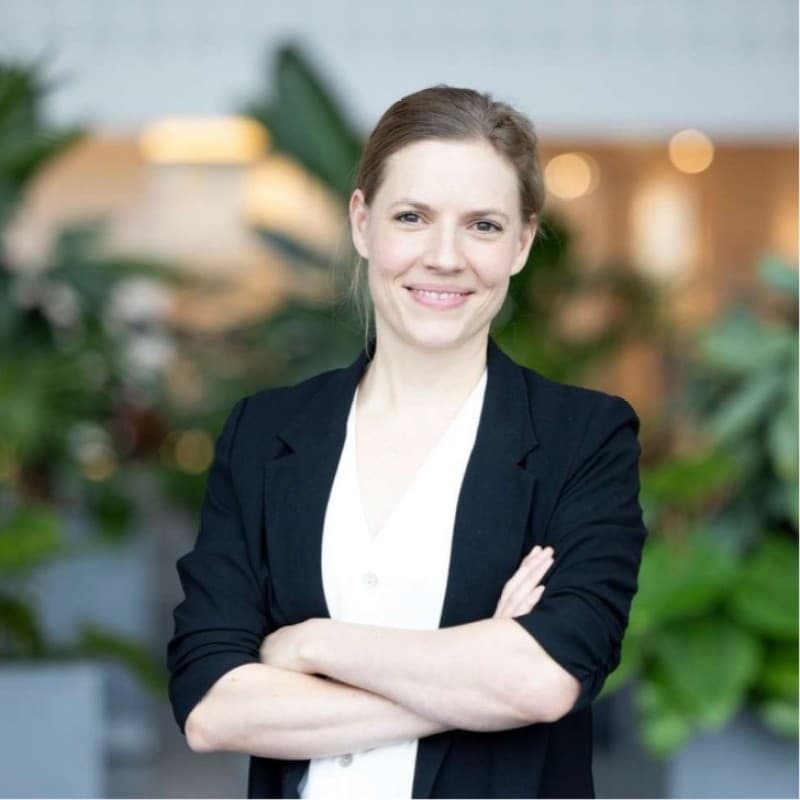
Stina Lyck Carstensen
Data excellence lead
Novo Nordisk Foundation
Data leader with a biomedical-engineering and signal-processing background and 10+ years spanning the full data landscape from analytics, engineering and science to governance, AI compliance, and operational data in software solutions. Brings the SME lens on what trustworthy data foundations look like, and how to make data and AI on regulated, sensitive data credible.
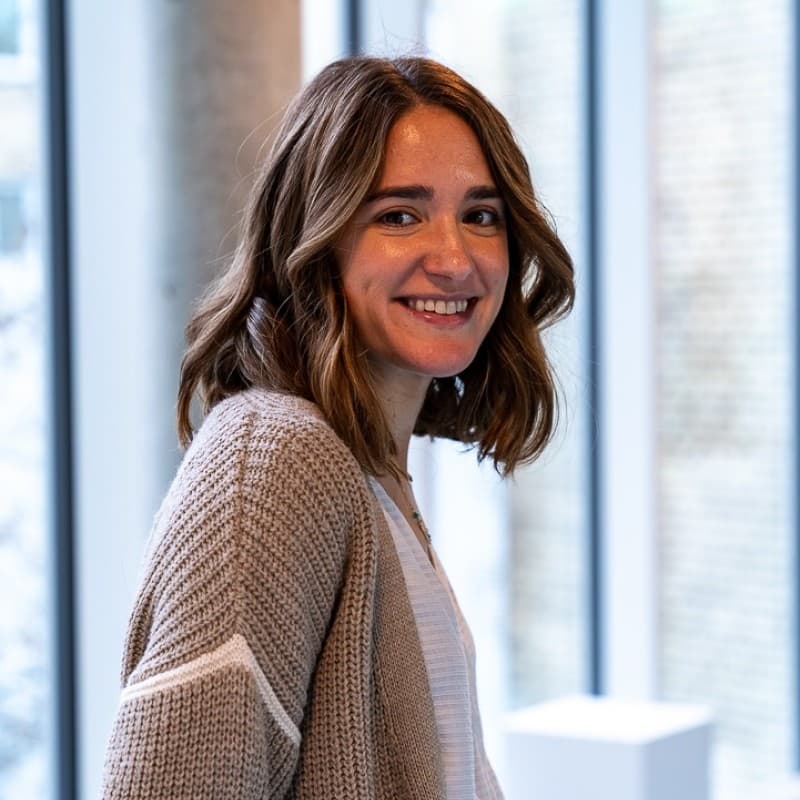
Alicia Parra Acero
AI & computational imaging
Danish Cancer Institute
Staff Scientist in AI and computational imaging at the Danish Cancer Institute. Helped frame the challenge from a data science and AI perspective, and judges how teams turn complex imaging data into scientifically meaningful, interpretable outputs.
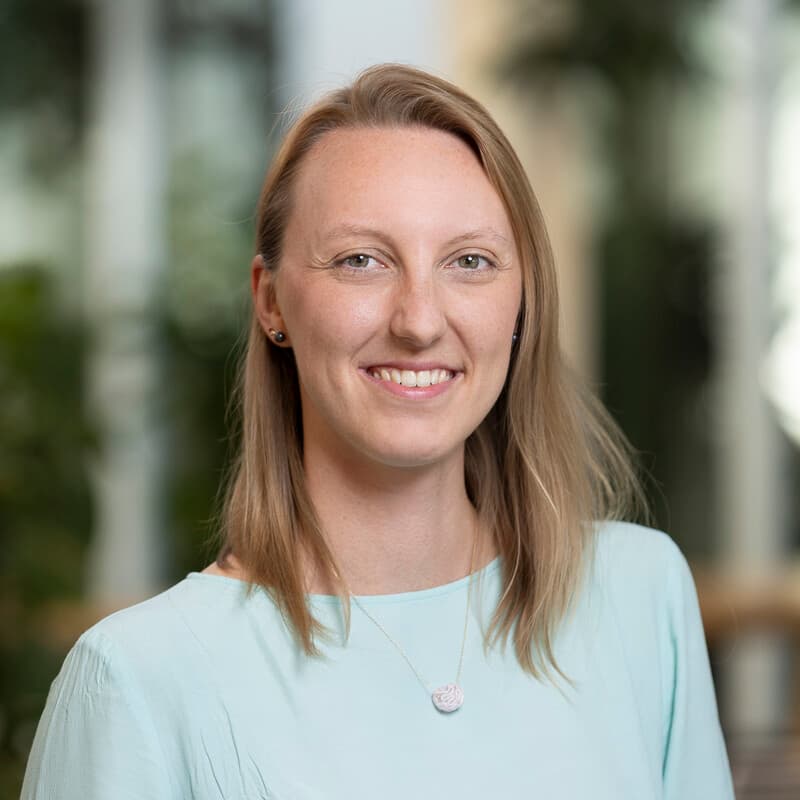
Johanna Perens
Quantitative brain imaging
Vibraint
Co-founder and CTO of Vibraint, responsible for the technical foundation of the platform. Shaped the challenges and judges from the perspective of the neuroscientists who will actually use these tools in brain-disease drug discovery.
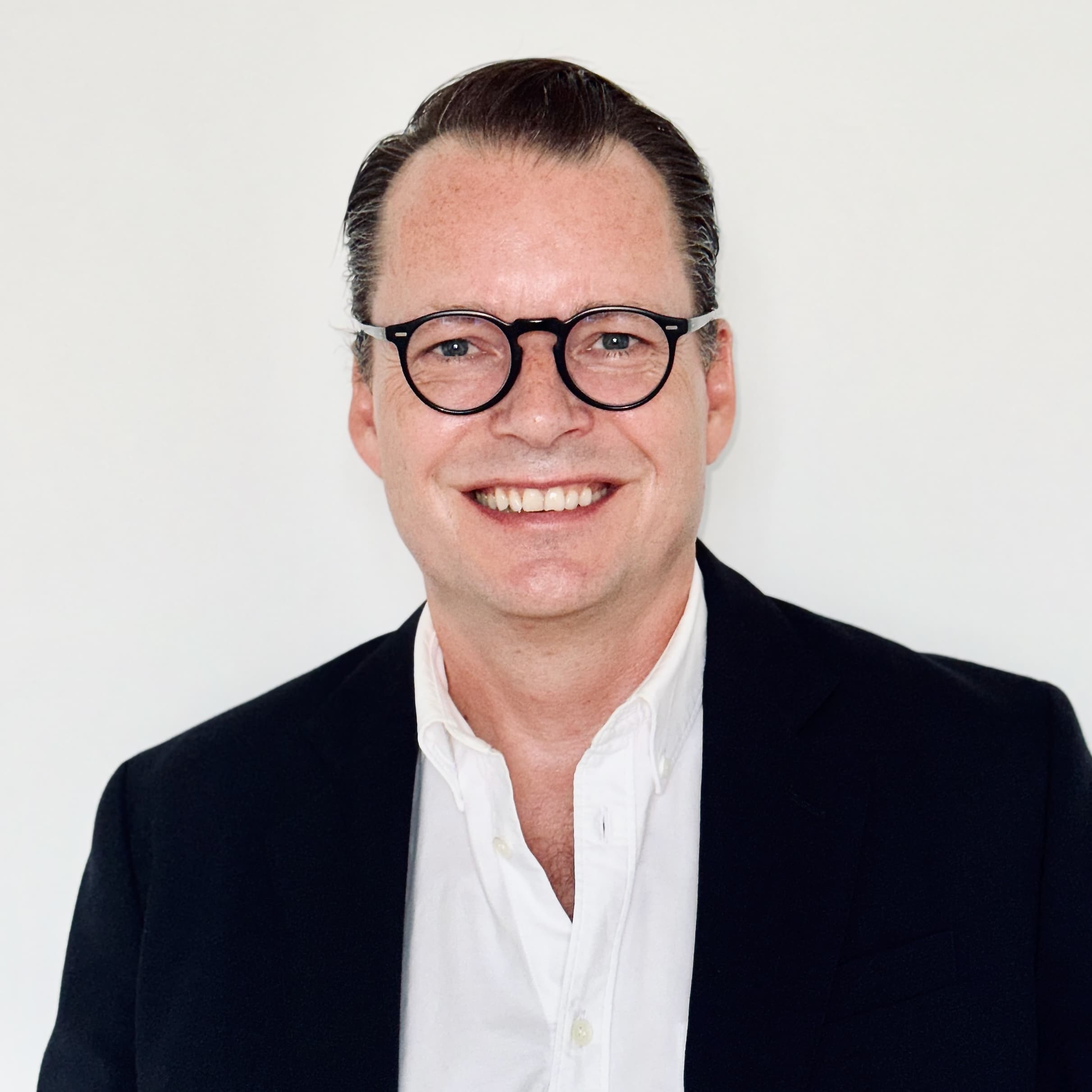
Jacob Langvad Nilsson
Product perspective
Applied Futures
Claude Community Ambassador and co-founder of Applied Futures, hosting the night. Judges from the product angle: is the prototype usable, does the story land, would a real user open it again tomorrow?
Judging criteria.
Weighted equally
- Usability & user experience
- Simple, guided, easy to interact with. Could someone unfamiliar with the data pick the prototype up and use it without a manual?
- Creativity & innovation
- Going beyond the starter tools and provided code. Did the team find an angle, technique, or interaction no one else did?
- Communication & presentation
- Two minutes is short. Did the team tell a clear story: what they built, why it matters, and what the result actually shows?
- Quality of the product
- Does it work end-to-end? Is the prototype polished enough that a real user could keep using it after the night?
- Insight & interpretability
- Does the prototype surface something meaningful in the data and help a non-expert make sense of it? This is what “explainable brains” means in practice.
- Impact on brain health
- If this kept going, would it actually help researchers working on brain disease? Real-world value to neuroscientists and drug discovery beats clever-but-niche.
- Feasibility & scalability
- Would the approach hold up beyond 12 mice and ~7,500 patches? Favours ideas that scale (to more data, more regions, more studies) over one-off demos.
Questions.
The short answers. Reach out if anything else.
- Who can participate?
- The hackathon is for STEM students, graduates, and young professionals, including product management and adjacent roles. No neuroscience background is required. Teams are deliberately cross-functional so different backgrounds work together during the build.
- What data will teams work with?
- Real mouse brain imaging data from Vibraint: c-Fos activation patterns in Vehicle vs Semaglutide-treated mice. Full data schema, sample code, and bucket access are in the starter repo on GitHub.
- Will I need a GPU?
- No. Challenge B works on any laptop. Challenge A ships with precomputed embeddings so a laptop is enough out of the box; if you want to train your own models, the repo includes a LightningAI Studio fallback with free GPU access.
- What tools will be used?
- Teams build with Claude Code, Anthropic's AI coding assistant. Every participant gets free Claude Console API credits to use during the event. You're free to bring any additional tools, languages, or frameworks alongside it.
- How are teams formed?
- Teams form at the event, on the night. Target size is 3–4 people per team. We'll help mix backgrounds so each team has a balance of product, engineering, data-science, and biology perspectives. Come solo or with a friend. Both work.
- Will food and drinks be served?
- Light snacks, not dinner. One drink voucher per participant, sliders served around 17:30 mid-build, and salty snacks on the tables. The venue closes at 20:00.
- What does the winning team get?
- Four bottles of wine and bragging rights. Demos are judged on the seven criteria in the Judges panel above.
- Who are the judges?
- Four judges: Stina Lyck Carstensen (Novo Nordisk Foundation) as data excellence lead, Alicia Parra Acero (Danish Cancer Institute) on AI and computational imaging, Johanna Perens (Vibraint) on quantitative brain imaging, and Jacob Langvad Nilsson (Applied Futures) on the product perspective.
- Is the hackathon free?
- Yes. The hackathon is completely free to attend. Registration is required and limited to 40 participants.
- Where exactly is the venue?
- Mesh Matrikel1 (Matrikel1 Workbar), Højbro Plads 10, 1200 Copenhagen K, Denmark. The event takes place at the Workbar Community Stage.