From AI experiments to daily workflow.
Three patterns that separate the 5% who actually changed how they work from the 95% who quietly went back to writing code by hand.
IDA Driving AI · Copenhagen · May 2026 · Jacob Langvad Nilsson with Diana Meda
Download the deck.
The slides as delivered, PDF. Use them, remix them, hand them to a colleague who didn’t make it.
Three patterns.
The MIT and WEF numbers say 95% of pilots stall. The 5% that don’t share these three habits. We’ve seen each one emerge independently across Copenhagen meetups over the past six months.
Pattern 01
Operating manual
Write a CLAUDE.md, not prompts. Version-controlled, reviewed instructions for the AI teammate. Every mistake becomes one new rule. The AI doesn't know your project. Give it the manual.
Pattern 02
Loops, not pipelines
Plan → Execute → Verify → Learn. Three hard gates: plan-mode review, machine-checkable tests, sandboxed workspace. Every correction becomes a one-line rule in lessons.md. Aviation solved this with checklists in 1979.
Pattern 03
Team infrastructure
Commit CLAUDE.md, SKILL.md, AGENTS.md to git. A new clone inherits all AI context and lessons. One engineer's corrections benefit the entire team. Capability travels with the codebase, not the individual.
Three horizons.
Don’t wait for a rewrite. Start tonight with the smallest version, then ratchet up.
- This week~20 min
- Open your most important repo. Write an embarrassingly short CLAUDE.md: build command, test command, one hard rule. Commit it.
- This sprint~1 sprint
- Use Plan Mode for every multi-file change. Every AI mistake → add one line to lessons.md. Add AGENTS.md at repo root.
- This quarter~1 quarter
- Treat CLAUDE.md changes as PRs, reviewed like any code. Run tests as a hard gate. Commit settings and skills. Share MCP configs across the team.
Stay in touch.
Questions, war stories, or want us to come speak somewhere? Connect on LinkedIn.

Jacob Langvad Nilsson
Co-founder, Applied Futures
Claude Community Ambassador
AI & Digital Project Lead at Mediq and co-founder of Applied Futures. Hosts the Copenhagen Claude Coders Community (CCC) and writes about agentic engineering.
Connect on LinkedIn →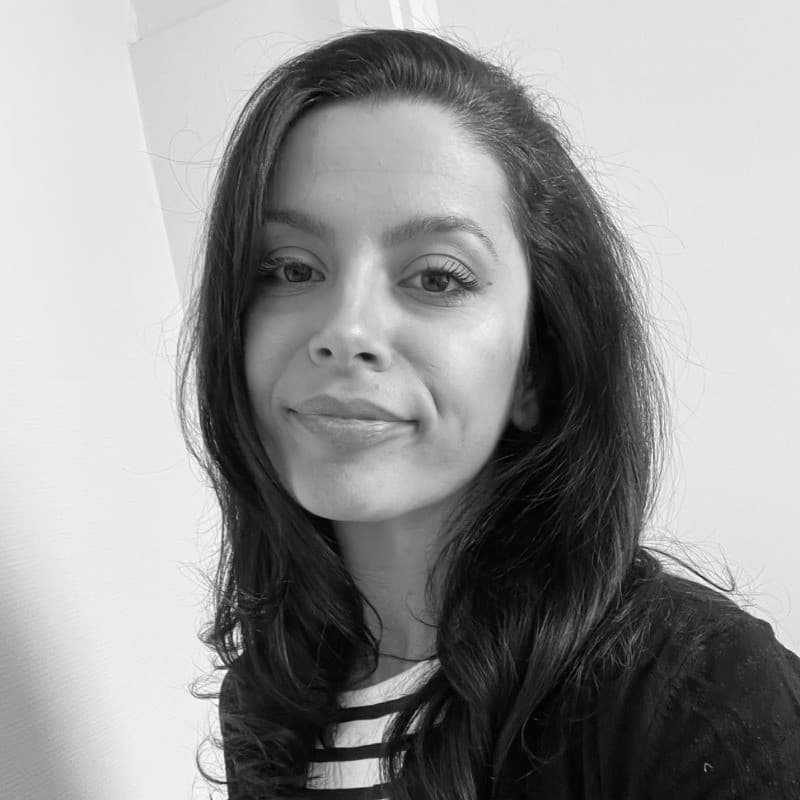
Diana Meda
Data Engineer
Servier Symphogen · DDSC
Data engineer at Servier Symphogen and active member of the Danish Data Science Community. Brings the data-platform lens on how AI workflows survive scale.
Connect on LinkedIn →Everything we cited.
Studies, people, and tooling mentioned in the deck, grouped so you can dig into whatever caught your ear.
Studies & data
- MIT NANDA — The GenAI Divide: 95% of enterprise AI pilots stallWhy workflow, not model capability, is the bottleneck.
- WEF — only 5% of custom AI projects reach productionCompanion stat to the MIT finding.
- Anthropic — What 81,000 people want from AI (March 2026)Largest qualitative study of how people actually use Claude: 159 countries, 70 languages.
- BCG 2025 — individual gains stall when scaled to colleagues~40% quality gain individually, ~0% without shared infrastructure.
People & projects cited
Standards & tooling
Background reading
- Andrej Karpathy — from "vibe coding" to agentic engineering
- Crew Resource Management — checklists & co-pilot protocols (aviation, 1979)The analogy underneath "loops, not pipelines."
Get the next meetup in your inbox
New dates, new cohorts, and the occasional essay. Subscribers get early-bird access and discount codes first. Roughly monthly, no ads.
Double opt-in: we email you a link to confirm. Unsubscribe any time.